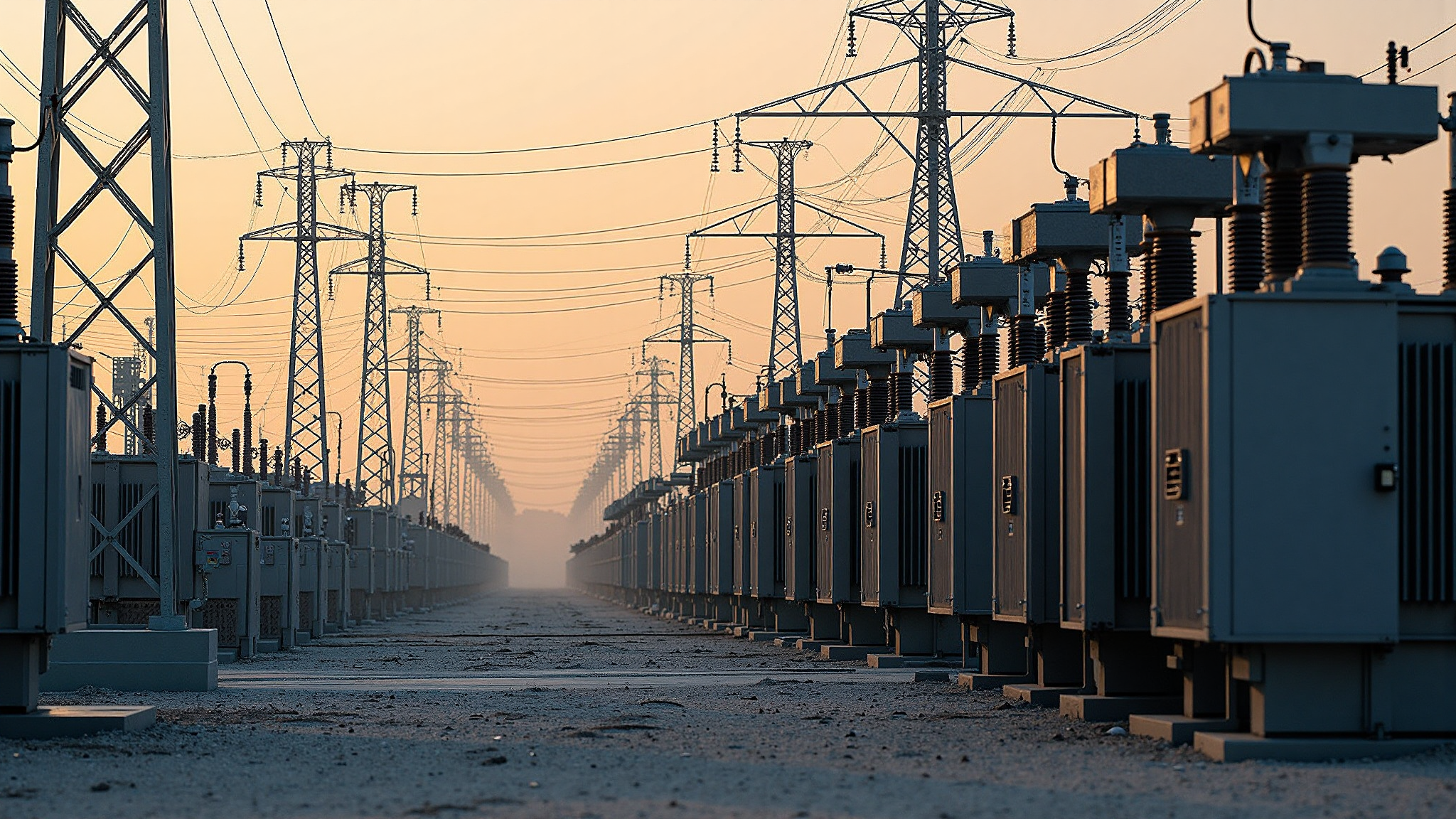


Under the guidance of the national 'dual-carbon' strategic goal, energy saving and carbon reduction in distribution networks have become an important direction for the transformation and upgrading of the power industry. As core equipment in distribution networks, the energy efficiency level of transformers is directly related to the overall operating efficiency and carbon emission level of the entire grid. In recent years, amorphous alloy transformers, with their excellent no-load loss performance, have gradually become the preferred solution for distribution network energy-saving renovation, attracting widespread attention from the industry.
Technical Advantages of Amorphous Alloy Transformers
Amorphous alloy transformers use amorphous alloy ribbons as core materials, with their atomic structure in a long-range disordered state, eliminating the magnetic domain wall movement loss of traditional silicon steel sheets. This unique material characteristic makes the no-load loss of amorphous alloy transformers 60%~80% lower than traditional silicon steel transformers, with significant energy-saving effects. In distribution networks, transformers operate under light load for long periods, with no-load loss accounting for 60%~70% of total loss, so using amorphous alloy transformers can significantly reduce the comprehensive line loss of distribution networks.

In addition, amorphous alloy transformers also have advantages such as small excitation current, low noise, and low temperature rise. With the continuous progress of material technology, the saturation magnetic induction strength of amorphous alloy ribbons continues to improve, making the design of amorphous alloy transformers more compact, with further optimized volume and weight, creating favorable conditions for application in urban dense areas and indoor substations.
Typical Application Scenarios in Distribution Network Renovation
In urban distribution network renovation, amorphous alloy transformers have been widely used in residential communities, commercial complexes, industrial parks, and other scenarios. Taking a provincial distribution network energy-saving renovation project as an example, after replacing more than 200 traditional S11 transformers in the jurisdiction with amorphous alloy transformers, the average no-load loss of the distribution network decreased by 65%, annual electricity savings exceeded 1.2 million kWh, and carbon dioxide emissions were reduced by about 1,000 tons, achieving both economic and environmental benefits.

In the field of rural grid renovation, amorphous alloy transformers also perform brilliantly. Rural areas have large load fluctuations and low transformer utilization rates, making the energy-saving advantages of amorphous alloy transformers under low load conditions even more prominent. Operating data from multiple grid companies shows that the power saving rate of amorphous alloy transformers in rural distribution networks can reach more than 70%, with investment payback periods typically only 3~5 years.
Market Development Trends and Future Outlook
According to industry research institution forecasts, the global amorphous alloy transformer market size will maintain an average annual growth rate of more than 10% in the next five years. In the domestic market, with the continuous promotion of policies such as the 'Distribution Transformer Energy Efficiency Improvement Plan' and the rigid demand for high-efficiency energy-saving equipment in new power system construction, the market penetration rate of amorphous alloy transformers is expected to increase from the current about 15% to more than 30%.
At the same time, the amorphous alloy material industrial chain is becoming increasingly mature. Multiple domestic amorphous alloy ribbon production lines have been put into operation successively, production capacity continues to expand, material costs are gradually decreasing, laying a solid foundation for the large-scale promotion and application of amorphous alloy transformers. In the future, with the mature application of 3D wound core technology and the improvement of intelligent operation and maintenance capabilities, amorphous alloy transformers will play a more critical role in building efficient, green, and intelligent modern distribution networks.